Long-term water storage is designed to ensure reliability and availability, but it also creates conditions where sediment can gradually accumulate. Even when incoming water appears clear, sediment in storage tanks is a common outcome over time. This article explains why sediment formation is typical in long-term storage systems and which underlying processes drive it.
Water is Never Completely Free of Particles
All water contains suspended material to some degree. Minerals, organic matter, and fine particulates can enter storage tanks through supply lines, runoff influence, or natural sources. While these particles may remain suspended initially, they tend to settle when water movement slows.
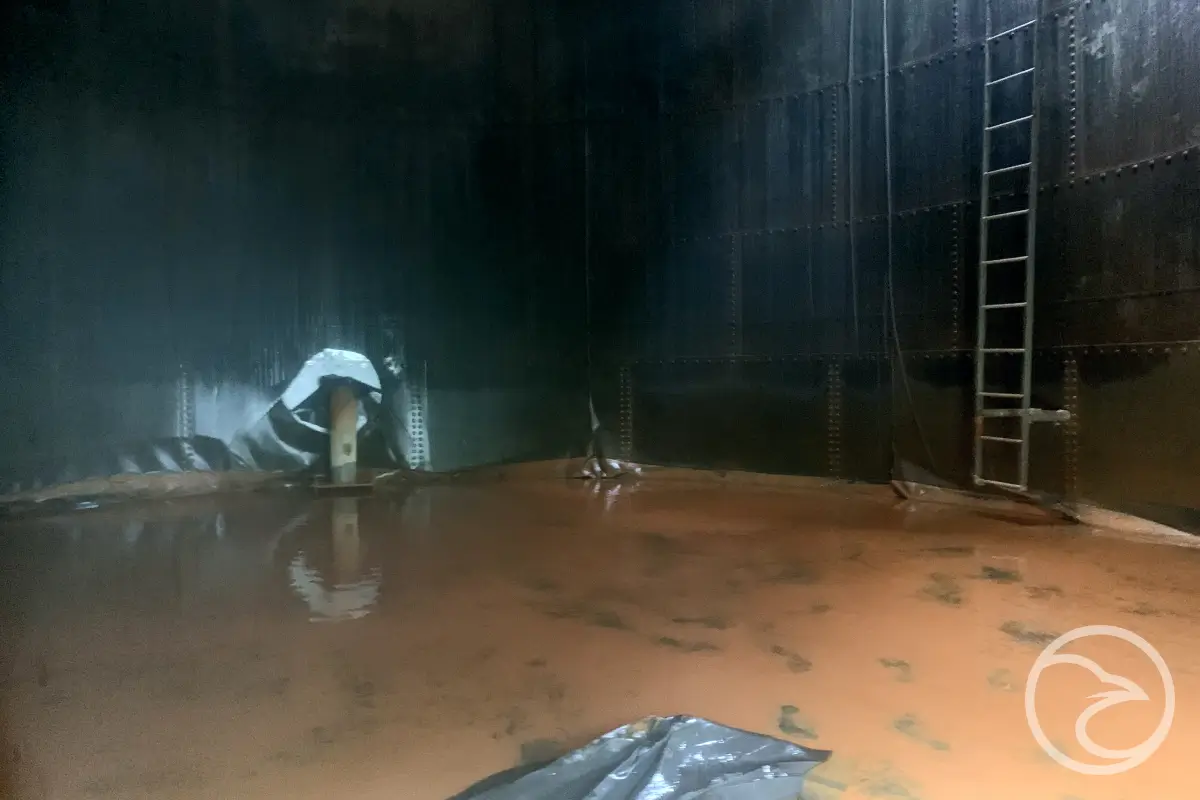
In long-term storage, reduced circulation allows gravity to act consistently on these particles, encouraging gradual settlement at the bottom or along internal surfaces.
Reduced Flow Encourages Sediment Settlement
Unlike continuously flowing systems, storage tanks are designed to hold water for extended periods. When inflow and outflow are infrequent or uneven, internal water movement decreases significantly.
Low flow conditions make it easier for suspended solids to separate from the water column. Over time, this process contributes to sediment in storage tanks even when source water quality remains relatively stable.
Natural Mineral Content Plays a Role
Dissolved minerals present in water can change form under certain conditions. Variations in temperature, pressure, or chemical balance may cause minerals to precipitate out of solution.
These precipitated materials often combine with existing particles, increasing their weight and accelerating settlement. This mechanism explains why sediment formation may continue even without visible external contamination.
Temperature Stratification Supports Sediment Formation
In large or deep tanks, temperature differences can develop between upper and lower water layers. Warmer water tends to remain near the surface, while cooler, denser water settles below.
This stratification reduces vertical mixing, allowing heavier particles to migrate downward more easily. As a result, sediment layers may form unevenly, with higher accumulation in cooler or less disturbed zones.
Biological Activity Contributes to Sediment
Long-term water storage can support biological processes, particularly when nutrients are present. Microorganisms may develop slowly over time, producing organic matter as part of their life cycle.
When biological material dies or aggregates, it adds to the overall sediment load. This organic contribution often mixes with mineral particles, creating more complex sediment layers within the tank.
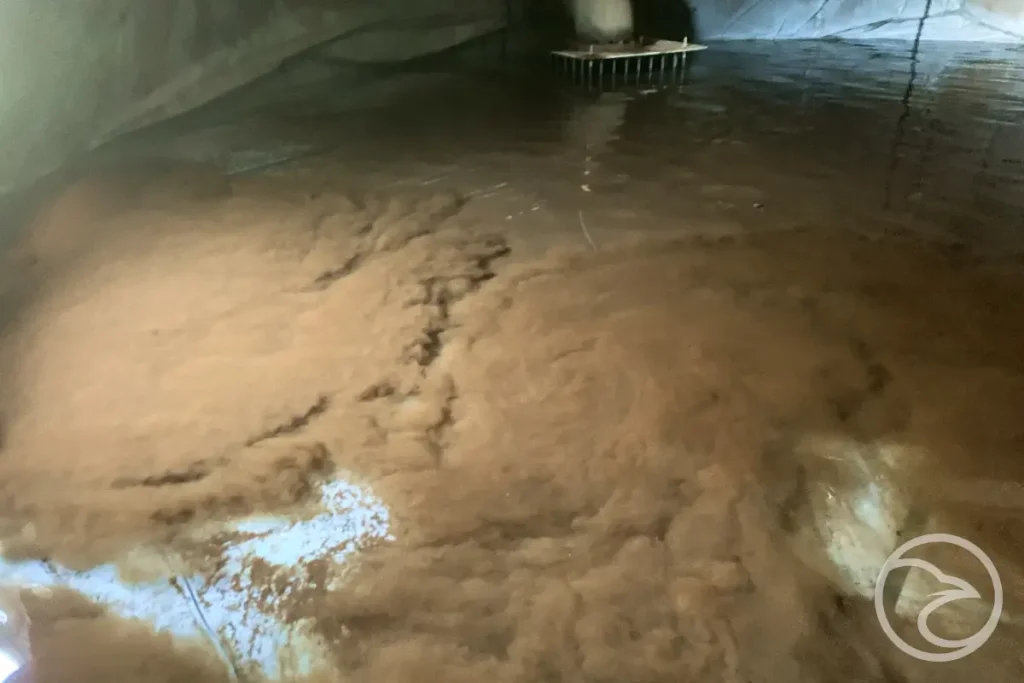
Tank Geometry Influences Where Sediment Collects
The internal design of a storage tank affects how sediment settles. Flat bases, corners, joints, and low-flow zones tend to collect more material than areas exposed to consistent movement.
Because internal conditions are rarely uniform, sediment in storage tanks often appears in concentrated zones rather than evenly distributed across the entire floor or surface.
Why Understanding Sediment Formation Matters
Recognising why sediment forms helps explain differences in internal tank conditions over time. It also clarifies why two tanks with similar designs and water sources may develop sediment at different rates, depending on usage patterns, turnover frequency, and environmental factors.
Understanding these mechanisms provides valuable context for evaluating long-term storage behaviour without framing sediment solely as a maintenance issue.
Final Thoughts
Sediment is a common feature of long-term water storage due to natural particle presence, reduced flow, mineral behaviour, temperature stratification, and biological processes. These factors work together gradually, making sediment in storage tanks a predictable outcome rather than an anomaly. By understanding why sediment forms, it becomes easier to interpret internal tank conditions and long-term storage dynamics in a broader operational context.
For those looking to better understand how internal conditions are evaluated over time, additional context is available through internal tank condition assessments.