Fire water storage must provide enough water to support the designed fire protection system. However, there is no universal fire water tank capacity for every building or facility. Required capacity depends on water demand, operating duration, fire systems, and available water supply.
Building use, fire risk, and applicable requirements can also influence the final tank size. A warehouse may require a different approach from an office building or industrial facility.
Likewise, two similar buildings may have different water storage requirements. Correct fire water tank sizing therefore starts with system demand rather than selecting a tank first.
This guide explains the main factors affecting capacity and why project-specific assessment matters.
What is Fire Water Tank Capacity?
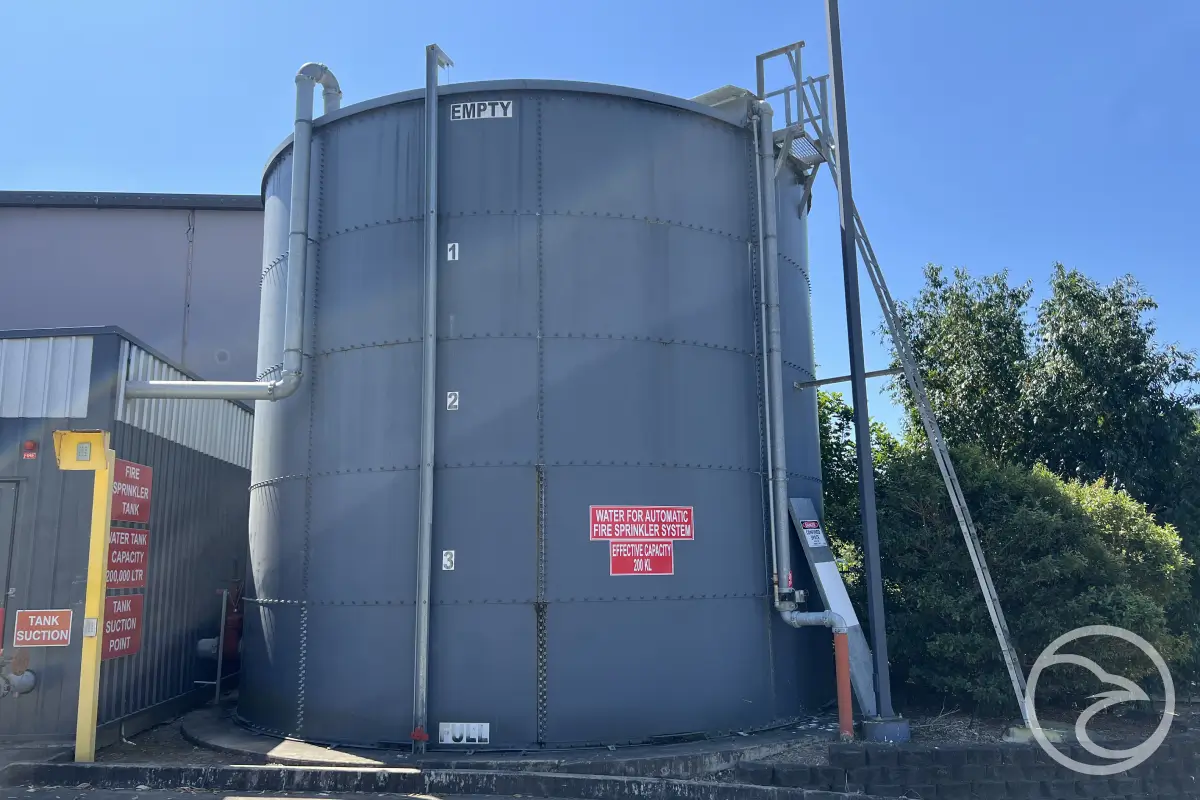
Fire water tank capacity describes the volume available to support a building’s fire protection systems. This water may supply sprinklers, hydrants, or other connected fire protection equipment. Tank capacity should not be considered independently from system design.
The required volume depends on how much water the system needs and how long demand must continue. It is also important to distinguish between nominal tank volume and usable fire water volume. A tank’s total physical volume may not equal the water available to the fire protection system.
Tank configuration, outlet position, operating levels, and system design can influence usable capacity. For this reason, selecting a nominal tank size alone may not confirm adequate fire water storage.
The required capacity should reflect the actual fire protection design.
How is Fire Water Tank Capacity Determined?
At its simplest, stored water demand relates to required flow and operating duration.
A basic concept can be expressed as:
Required water flow × required duration = base water volume
However, actual fire protection water storage tank sizing involves more than this basic relationship. The calculation must reflect the systems being supplied and their design requirements.
Available water sources can also affect how much dedicated storage is required. Several factors therefore need to be considered together.
Required Water Flow
Fire protection systems are designed around specific water demands. The required flow represents how much water must be available during operation. Higher system demand generally increases the required stored water volume.
However, flow requirements cannot be estimated reliably from building size alone. Fire protection design, building use, and hazard conditions can influence demand. Different areas within the same facility may also have different design requirements.
The relevant system demand should therefore be established before tank selection begins.
Required Operating Duration
Water demand must be maintained for a required period. This duration has a direct effect on fire tank capacity. A system requiring the same flow for longer needs more available water.
For example, doubling the operating duration can significantly increase total water demand. However, required duration depends on the applicable fire protection design and requirements.
It should not be selected using a generic assumption. Flow and duration must therefore be considered together when determining stored water requirements.
Sprinkler System Demand
Automatic sprinkler systems can represent a major part of fire water demand. Their required flow depends on the system design and protected hazard. This means sprinkler tank sizes can vary significantly between projects.
A small commercial property may have different requirements from a high-storage warehouse. Building floor area alone does not provide enough information for reliable sizing. Sprinkler design conditions must be considered alongside the required operating duration.
Available water supply can also influence dedicated storage requirements.
Fire Hydrant Demand
Fire hydrant systems can create additional demand on stored fire water. Their requirements must be considered when they depend on the same tank. Hydrant demand may differ from sprinkler system demand.
The required operating duration may also be different. System designers must determine how these demands apply within the overall fire protection arrangement.
The tank should then provide the required usable water under the intended design conditions.
Combined Fire Protection Demand
Some buildings contain several fire protection systems supplied from a common water source. These systems cannot always be considered independently. Sprinklers and hydrants may influence total required storage under certain design conditions.
However, their individual maximum demands should not simply be added without appropriate system design. The applicable requirements determine how combined demand must be assessed. This is another reason generic online tank size calculations can be misleading.
The complete fire protection system needs to be considered.
Usable Water Volume
Nominal tank capacity and usable fire water capacity are not always identical. The system must be able to access the required water during operation. Outlet configuration and minimum operating levels can influence available volume.
Some water may remain below the effective suction or outlet level. Tank design can also require space that is not part of usable fire water storage. Therefore, required storage should be based on usable capacity where appropriate.
This distinction becomes especially important when capacity margins are limited.
Key Factors that Affect Fire Water Tank Size
Flow and duration provide the foundation for sizing. However, several project characteristics influence those requirements.
Building Type and Use
Different buildings present different fire protection demands. An office, warehouse, factory, and distribution centre can have very different risk profiles.
Building use can influence sprinkler design and other fire protection requirements. Changes in occupancy can also alter future demand.
Tank sizing should therefore reflect the actual building use.
Fire Risk
The nature of the fire risk can affect water demand. Stored materials, processes, equipment, and building configuration can all influence system design.
Higher-risk environments may require different fire protection arrangements. The tank must support the system designed for those conditions.
Available Water Supply
A dedicated tank may not always be the only available water source. Some sites can use an existing supply as part of the fire protection design. Other sites may depend heavily on stored water.
Supply reliability, pressure, flow, and refill capability can influence storage requirements. The available supply should therefore be assessed before finalising tank capacity.
Fire Protection System Configuration
A tank may serve one system or several systems. This configuration directly affects the sizing process.
Sprinklers, hydrants, and other systems can have different demand characteristics. The complete arrangement must be understood before selecting tank capacity.
Required Duration
Required operating duration can substantially affect final storage volume. Even moderate flow demand can require significant capacity when sustained for longer periods.
Duration should therefore never be treated as a secondary consideration. It forms a central part of fire water storage calculations.
Future Building Changes
Fire protection requirements can change when buildings are modified. Extensions, new storage layouts, or different operations can affect system demand. Warehouse racking changes are one example.
Future changes should be considered where they are already known during tank planning. This can help avoid selecting storage that immediately becomes unsuitable after a planned development.
Fire Water Tank Capacity for Warehouses
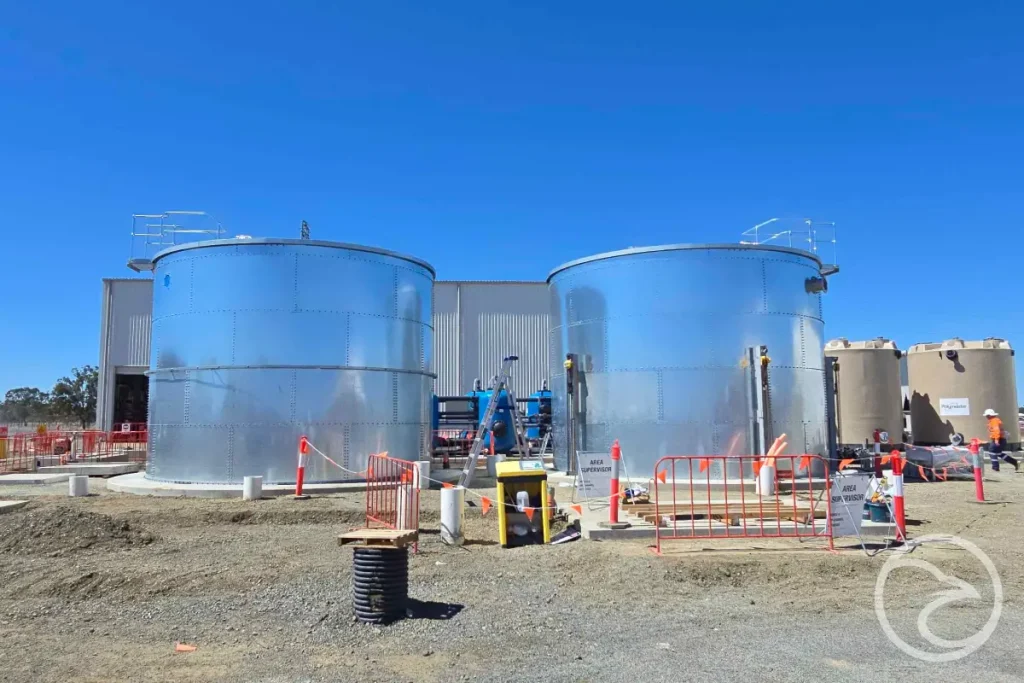
Warehouse fire tanks require careful sizing because warehouse fire risks can vary considerably. Two warehouses with similar floor areas may need different fire water capacities. The stored products can influence fire protection requirements.
Storage height and racking configuration can also affect sprinkler system design. High-piled storage can create different demands from low-level general storage. Packaging materials and commodity characteristics may also influence the protected hazard.
For these reasons, warehouse floor area alone cannot determine the correct fire tank size. The fire protection system must be designed around the actual storage arrangement. Water demand and required duration can then be established.
Available site supply also needs consideration. Some warehouse sites may have adequate external water support.
Others may require substantial dedicated fire water storage. Future warehouse use is another important consideration. Changing products or increasing storage height can alter fire protection requirements.
A tank selected for the original arrangement may not automatically suit future operations. Fire water capacity should therefore form part of broader warehouse fire protection planning.
Fire Water Tank Capacity for Industrial Facilities
Industrial sites can present particularly varied fire protection requirements. Processes, materials, equipment, and building layouts differ significantly between facilities. An industrial fire tank should therefore be sized for the site’s specific protection systems.
Generic capacity recommendations can overlook important operating conditions. Some facilities may contain combustible materials or specialised processing areas. Others may have multiple buildings supported by shared fire protection infrastructure.
Water supply conditions can also vary across large industrial sites. The required capacity should account for the systems depending on stored water. It should also consider the required flow and operating duration.
Industrial sites can change over time. New processes, equipment, or building extensions may alter fire protection demand. Major site modifications should therefore consider whether existing fire water storage remains adequate.
Fire Water Tank Capacity for Sprinkler Systems
Sprinkler systems are a common reason for dedicated fire water storage. However, there is no standard sprinkler tank size suitable for every property. Required capacity depends on the sprinkler system’s hydraulic demand.
Operating duration must also be considered. Available water supply can reduce or change dedicated storage requirements in some designs. The protected hazard is another major consideration.
Different occupancies and storage arrangements can create very different sprinkler demands. This explains why two similarly sized buildings may require different tanks. A larger building does not automatically need proportionally more stored sprinkler water.
Likewise, a smaller high-risk area can create significant water demand. Tank selection should follow the established sprinkler system requirements.
It should not be based only on building dimensions.
Does a Larger Fire Tank Always Provide Better Protection?
A larger tank may appear to provide an additional safety margin. However, simply increasing capacity does not replace correct fire protection design. Oversizing can introduce practical challenges without addressing system weaknesses.
Larger tanks require more installation space. They also store greater water weight, which affects foundations and structural requirements. Installation costs can increase with tank capacity.
Maintenance and inspection access still need consideration regardless of size. An oversized tank also cannot compensate for inadequate pumps, unsuitable pipework, or incorrect system design. Fire protection depends on the complete system working together.
The goal should therefore be appropriate capacity rather than maximum possible capacity. The tank must reliably support the established fire water demand.
How Available Water Supply Affects Fire Tank Capacity
Stored water is only one possible part of a fire protection water supply. The available external supply can significantly influence tank sizing. A site with sufficient reliable supply may have different storage requirements from an isolated facility.
Refill capability can also influence the overall design. However, an available water connection should not automatically be assumed adequate. Flow, pressure, reliability, and system requirements must be assessed.
This explains why similar properties can require different fire fighting water tank capacities. Their buildings may be comparable while their available water supplies differ. The relationship between stored and external water should be established during fire protection design.
Tank capacity can then reflect the actual system arrangement.
Common Fire Water Tank Sizing Mistakes
Incorrect assumptions can lead to unsuitable tank selection.
Several sizing mistakes are particularly important to avoid:
- choosing capacity based only on building floor area;
- ignoring required operating duration;
- confusing nominal volume with usable water capacity;
- overlooking sprinkler or hydrant demand;
- assuming every warehouse needs the same tank size;
- ignoring existing water supply conditions;
- selecting the tank before system demand is established;
- overlooking planned building or storage changes;
- assuming a larger tank automatically improves protection.
These mistakes often result from treating the tank as an isolated component. In reality, it forms part of a complete fire protection system.
Tank capacity should therefore follow system requirements rather than determine them.
Why Fire Tank Capacity Should be Confirmed Before Tank Selection
Capacity should normally be established before choosing the final tank configuration. Once the required volume is known, practical tank options can be evaluated. Properly specified fire water tanks can provide reliable storage based on the required capacity and site conditions. Available site space becomes an important consideration at this stage.
Tank dimensions must fit the designated area while providing the required usable capacity. Access for installation also matters. A location with restricted access may favour modular tank construction.
Tank material can then be considered alongside environmental and project requirements. Foundation conditions and structural loads must also support the selected system. Pipework, outlets, access points, and maintenance clearances require planning.
This sequence helps prevent a common problem. A tank should not be selected first and forced to meet fire protection requirements afterwards.
The fire system determines the required capacity. The tank design then provides that capacity within the project’s practical constraints.
Capacity is Only One Part of Fire Tank Performance
Correct fire water tank sizing is essential, but capacity alone does not ensure reliable performance. The stored water must remain available when required. Leaks can gradually reduce available volume.
Problems with tank components can also affect system reliability. Internal conditions may change during long periods of water storage. Sediment and other deposits can develop depending on operating conditions.
Tank integrity should therefore be monitored throughout its service life. Maintenance may include checking accessible components, water levels, fittings, and signs of leakage. Regular fire tank inspections help assess tank condition and identify issues that could affect reliable water storage.
They can identify deterioration before it develops into a larger problem. Inspection records can also support long-term asset management.
This is especially important for tanks supporting critical fire protection infrastructure. A correctly sized tank must remain correctly maintained.
Building owners should also understand fire tank inspection requirements for commercial properties when planning ongoing fire water tank management.
When Should Existing Fire Tank Capacity be Reviewed?
Fire water storage requirements should not necessarily remain unchanged throughout a building’s life. Significant changes to the property can justify reviewing existing capacity. Building extensions are an obvious example. A larger protected area may alter fire protection requirements.
Changes in warehouse storage can also be important. New racking arrangements, storage heights, or commodities may affect sprinkler design. Industrial facilities can experience similar changes when processes or equipment are modified.
Fire protection system upgrades may also change water demand. Changes to the available external water supply can create another reason for review. Existing tanks should therefore be considered when major site conditions change.
A previous capacity calculation may no longer represent current requirements.
Final Considerations for Fire Water Tank Capacity
There is no universal fire water tank capacity suitable for every building. Correct sizing depends on the actual fire protection system and its water demand. Required flow and operating duration are fundamental considerations.
Sprinklers, hydrants, available water supply, and system configuration can also affect required storage. Building use and fire risk add further project-specific factors. This is particularly important for warehouses and industrial facilities.
Nominal tank volume should not automatically be treated as usable fire water capacity. The complete tank and fire protection system must work together. Capacity should therefore be established before tank material, dimensions, and configuration are finalised.
Ongoing maintenance and inspection are equally important after installation. A properly sized tank must continue providing the required usable water throughout its operational life.