How Does a Fire Safety Schedule Affect Fire Tank Inspections?
A Fire Safety Schedule helps establish which fire safety measures apply to the property. It also identifies their required minimum performance standards. This information can influence inspection and maintenance planning.
For example, a fire tank may support other listed fire safety systems. Its condition can therefore be relevant to the performance of those systems. Owners should understand how the tank fits within the property’s complete fire protection arrangement.
They should also identify any applicable performance solutions. A performance solution may establish maintenance activities that differ from AS 1851 requirements.
NSW regulations recognise these arrangements where the approved solution addresses the relevant maintenance activity.
How Often do Fire Tanks Need to be Inspected?
There is no single inspection interval that should be assumed for every fire tank. Required servicing depends on the applicable measure and maintenance activity. AS 1851-2012 specifies routine servicing requirements for systems within its scope.
Applicable performance solutions may establish different requirements. The building’s fire safety documentation must also be considered. For these reasons, owners should avoid choosing inspection intervals based only on tank age.
They should establish requirements from the documents and standards applying to their building. Some fire safety obligations also operate on separate certification schedules. For example, an Annual Fire Safety Statement is generally required each year for applicable buildings.
Critical fire safety measures can require supplementary statements at intervals below 12 months. Those intervals are specified within the Fire Safety Schedule.
These certification requirements should not be confused with every routine servicing interval.
What Areas of a Fire Water Tank may Require Attention?
A fire water tank inspection can involve several parts of the tank and associated components. The exact requirements depend on tank design and the applicable inspection scope.
Potential areas requiring attention include:
- Tank panels
- Internal surfaces
- External surfaces
- Tank roof
- Tank floor
- Liners
- Seals
- Joints
- Bolts and fasteners
- Pipe connections
- Valves
- Access points
- Visible corrosion
- Water leakage
- Structural deterioration
Different defects can develop in different areas. External surfaces may experience environmental exposure. Internal components remain exposed to stored water and internal conditions.
Connections and joints can experience different stresses from tank panels. A systematic approach helps reduce the chance of overlooking important areas.
Why is Corrosion Important During Fire Tank Inspections?
Corrosion can affect steel tank components over time. The risk depends on materials, protective systems, water exposure, and environmental conditions. Small areas of corrosion may initially appear limited.
However, continued deterioration can affect a larger surface area.
Particular attention may be needed around:
- Panel connections
- Fasteners
- Roof components
- Damaged protective surfaces
- Pipe penetrations
- Areas exposed to persistent moisture
Corrosion severity is also important. Surface changes differ from deeper material deterioration. An inspection can help identify areas requiring further assessment or remedial work.
Why Should Fire Tank Liners be Considered?
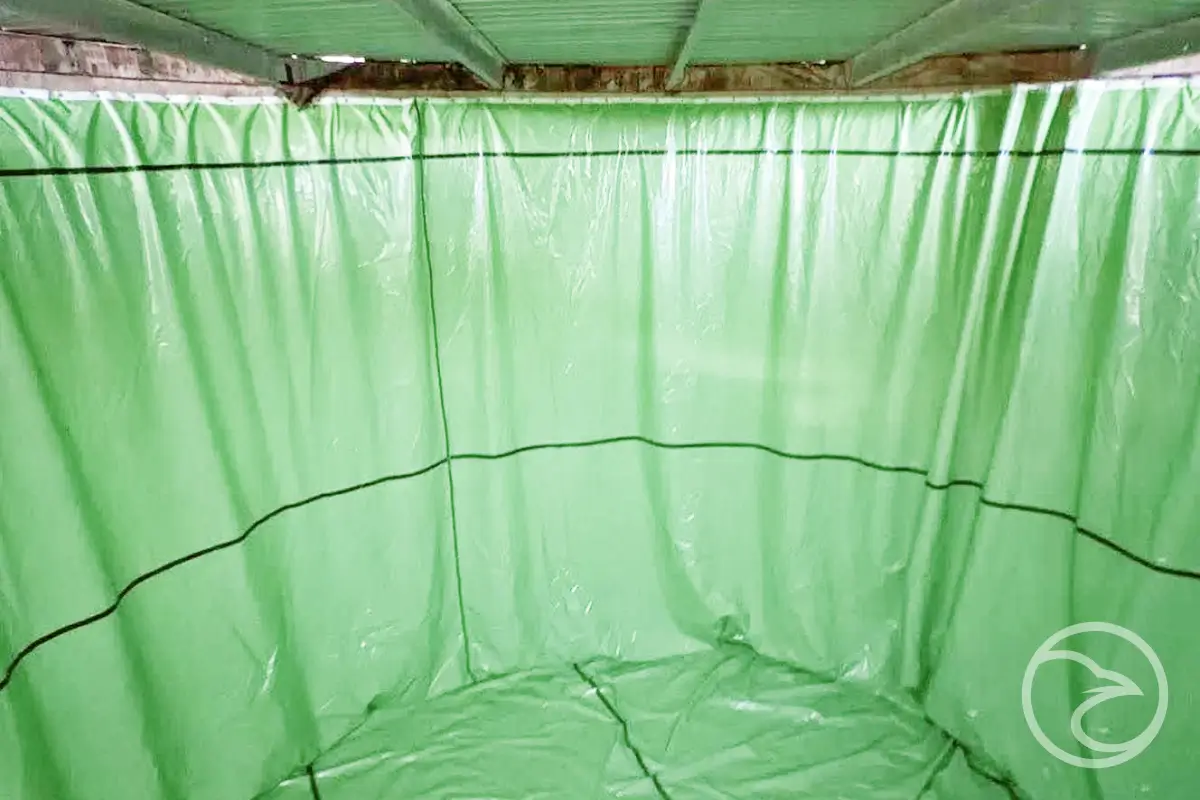
Some fire water tanks use internal liners for water containment. Liners can deteriorate through ageing, abrasion, movement, and mechanical damage.
Potential problems can include:
- Tears
- Punctures
- Abrasion
- Damaged seams
- Stress around fittings
- Material deterioration
- Excessive folds
- Localised wear
A damaged liner does not always create an immediate visible leak. Some deterioration can develop before water loss becomes obvious.
Liner condition may therefore form an important part of tank condition assessment. For a closer look at liner condition, our fire tank liner inspection guide explains the key areas and common signs of damage.
Are Leaks Always Easy to Identify?
No. Some leaks produce obvious external signs. Others can be difficult to locate immediately. Water loss may originate from several areas.
Potential sources include:
- Liners
- Seals
- Connections
- Fittings
- Joints
- Damaged components
Visible water near a tank does not automatically identify the source. The surrounding components may need closer assessment. Recurring leakage can also indicate a wider deterioration problem.
This is why leak identification should consider the complete tank condition.
What Should Happen when an Inspection Identifies a Defect?
An inspection can identify defects requiring further attention. Not every defect requires the same response. The appropriate action depends on its type, severity, and location.
Possible next steps can include:
- Further assessment
- Cleaning
- Maintenance
- Component repair
- Seal replacement
- Corrosion treatment
- Liner repair
- Relining
- Broader refurbishment
NSW guidance states that building owners should undertake remedial work for identified defects promptly. Fire safety systems and equipment should remain operational as required.
A small isolated problem may require a targeted repair. Multiple connected defects may require a broader solution. The inspection findings should guide the next step.
What Records Must Commercial Property Owners Keep?
Documentation is an important part of NSW fire safety compliance. From 13 February 2026, specific record-keeping requirements apply to relevant maintenance activities. Building owners must retain required AS 1851 records on site for at least seven years.
The same requirement applies to records required by an approved performance solution. Records must be available for inspection by the relevant council or Fire Commissioner.
These records can provide an ongoing history of servicing activities. They can also help track recurring problems or changes in tank condition.
Useful records may document:
- Completed servicing
- Identified defects
- Corrective work
- Relevant testing
- Maintenance activities
- Previous condition findings
Good record management can also support future maintenance planning.
What is an Annual Fire Safety Statement?
An Annual Fire Safety Statement is separate from routine servicing. It provides formal confirmation concerning applicable essential fire safety measures. For relevant buildings, each listed measure must be assessed by an accredited practitioner.
The assessment confirms whether the measure can perform to its required standard. The building’s exit systems must also be inspected as part of the statement requirements. Building owners must provide the statement to their local council.
A copy must also be provided to the Fire Commissioner. Annual Fire Safety Statements are generally issued each year. They cover the essential fire safety measures applying to the building.
Are Fire Tank Inspections and Annual Fire Safety Statements the Same?
No. This distinction is important for Sydney commercial property owners. Routine inspection and servicing support the ongoing condition of fire safety systems. An Annual Fire Safety Statement is a formal certification requirement.
The two processes are related, but they serve different purposes. Routine servicing can occur at intervals required by applicable maintenance procedures. The annual statement confirms the performance of listed essential fire safety measures.
It must involve an accredited practitioner for the required assessments. Therefore, completing routine maintenance does not automatically replace annual certification obligations.
Likewise, an annual assessment does not replace all required routine servicing activities.
What are Fire Tank Compliance Inspections?
The phrase fire tank compliance inspection can describe inspections connected with regulatory or maintenance requirements. However, the exact meaning can vary between providers.
Property owners should focus on the actual scope of the inspection.
They should establish:
- Which tank components are being reviewed
- Which fire safety measure is involved
- Which standard applies
- Which maintenance activities are required
- Whether an approved performance solution applies
- What records will be produced
- Whether separate certification is required
This approach is more useful than relying only on the term “compliance inspection.” It connects the work with the property’s actual regulatory requirements.
What is the Difference Between Inspection, Testing, and Maintenance?
These terms can describe different activities. An inspection generally involves reviewing the condition of relevant components. Testing checks whether equipment or systems perform as required.
Maintenance involves activities intended to preserve or restore suitable operation. A single servicing visit may include several types of activity. The exact combination depends on the system and applicable requirements.
This distinction matters because visual inspection alone may not satisfy every servicing requirement. Likewise, testing one component may not establish the condition of the complete tank.
Can Drone Inspections be Used for Fire Tanks?
Drone technology can support some tank inspection activities. It can provide visual access to areas that may otherwise be difficult to observe.
Potential applications can include reviewing:
- Roof surfaces
- External panels
- Upper connections
- Difficult access areas
- Visible corrosion
- External damage
However, a drone does not automatically replace every required inspection or testing activity. Some defects require physical access or closer examination.
Internal conditions may also require different assessment methods. The inspection method should match the required scope and applicable obligations.
A drone tank inspection can help assess roofs, external panels, corrosion, and difficult-to-access areas without relying only on direct access.
Why are Regular Fire Tank Inspections Important?
A fire water tank can experience gradual deterioration without obvious external warning signs. Routine inspections help identify changes before they become more extensive.
Potential benefits include:
- Identifying corrosion
- Detecting leaks
- Finding liner deterioration
- Reviewing seals and connections
- Identifying damaged components
- Tracking changes over time
- Supporting maintenance planning
- Maintaining required documentation
Inspection records also create a useful history of tank condition. This can help distinguish new deterioration from previously identified issues.
Regular servicing supports a planned approach rather than relying only on visible failures. Our fire tank inspections help Sydney property owners identify tank deterioration and support ongoing fire safety maintenance.
Can Fire Tank Inspections Reduce Larger Repair Requirements?
Inspections cannot prevent every future defect. However, earlier identification can provide more options for addressing deterioration. For example, isolated corrosion may be easier to manage before it spreads.
A small liner defect may also require different work from extensive deterioration. Loose or deteriorated components can be addressed before related areas become affected. The important point is early information.
Inspection provides information about tank condition at a particular time. That information can support better maintenance decisions.
What Should Sydney Property Owners Review?
Commercial property owners should understand the fire safety arrangements applying to their specific building.
A useful review can include:
- Current Fire Safety Schedule
- Listed essential fire safety measures
- Applicable AS 1851 requirements
- Approved performance solutions
- Existing maintenance contracts
- Previous inspection records
- Outstanding defects
- Annual Fire Safety Statement requirements
- Record storage arrangements
From 13 February 2026, applicable AS 1851 servicing requirements are mandatory across NSW. Existing maintenance arrangements may therefore require review.
The goal is not simply to schedule another tank inspection. The servicing program should match the actual requirements applying to the property.
Fire Tank Inspection Requirements in Sydney: Key Takeaways
Fire tank inspections in Sydney form part of broader fire safety management responsibilities. From 13 February 2026, important AS 1851-2012 requirements apply across NSW. Relevant essential fire safety measures must follow AS 1851 maintenance procedures.
An approved performance solution may apply to particular maintenance activities instead. Building owners remain responsible for ensuring applicable measures are properly maintained. They should understand their Fire Safety Schedule and relevant servicing requirements.
Required records must also be maintained and available for inspection. Routine servicing should not be confused with Annual Fire Safety Statement certification. Both can form important parts of a property’s overall fire safety responsibilities.
For Sydney commercial properties, the correct inspection approach depends on the specific building and its fire safety measures.
Fire water tanks play an important role in many commercial fire protection systems. Their condition can affect the reliability of the wider fire protection system. For this reason, regular inspection, testing, and maintenance are important.
Fire tank requirements in Sydney are also connected with broader NSW fire safety regulations. Since 13 February 2026, AS 1851-2012 requirements have become mandatory for relevant NSW buildings. The changes apply to essential fire safety measures covered by the standard.
Building owners therefore need to understand their inspection and maintenance responsibilities. This guide explains key fire tank inspection requirements in Sydney and the role of AS 1851-2012.
What are the Fire Tank Inspection Requirements in Sydney?
Fire tank inspection requirements depend on the building and its applicable fire safety measures. NSW requirements changed significantly on 13 February 2026. From that date, essential fire safety measures must follow prescribed maintenance procedures.
AS 1851-2012 applies when the relevant maintenance activity is covered by the standard. An approved performance solution can apply instead when it addresses that maintenance activity. The requirements cover both new and existing relevant buildings across NSW.
This means Sydney commercial property owners should review their current fire safety maintenance arrangements. They should also understand which measures appear on their Fire Safety Schedule.
A fire water tank may form part of a larger fire protection system. Its servicing requirements should therefore be considered within that complete system.
What is AS 1851-2012?
AS 1851-2012 is an Australian Standard for routine servicing of fire protection systems and equipment. It establishes procedures for inspection, testing, preventive maintenance, and related servicing activities. The standard supports consistent maintenance of fire safety measures during their operational life.
From 13 February 2026, NSW regulations made its procedures mandatory in applicable circumstances. However, AS 1851 does not automatically apply to every component inside every building. The requirements relate to essential fire safety measures covered by the standard.
An applicable approved performance solution can also establish different maintenance requirements. Building owners should therefore consider their specific building documentation.
Which Sydney Properties are Covered by the AS 1851 Requirements?
The 2026 requirements apply across NSW, including Sydney. They cover new and existing Class 1b and Class 2 to Class 9 buildings. These classifications include many types of commercial and multi-residential properties.
Depending on classification and building arrangements, they can include:
- Office buildings
- Retail properties
- Warehouses
- Industrial facilities
- Apartment buildings
- Hotels
- Healthcare facilities
- Educational buildings
- Certain accommodation buildings
However, building classification alone does not determine individual fire tank requirements. The fire safety measures applying to each property can differ. Building owners should check their Fire Safety Schedule and relevant building documentation.
This helps establish which essential fire safety measures apply to their property.
What is an Essential Fire Safety Measure?
Essential fire safety measures are measures identified as essential for a particular building. These measures are listed within the building’s Fire Safety Schedule. The schedule also identifies relevant performance requirements for those measures.
Different buildings can have different essential fire safety measures. A measure applying to one commercial property may not apply to another. This is important when considering fire tank inspections in Sydney.
The tank should not be viewed separately from the fire protection systems it supports. Building-specific documentation provides the starting point for understanding applicable requirements.
Who is Responsible for Fire Tank Inspection Compliance?
Responsibility for maintaining essential fire safety measures rests with the building owner. This can include different parties depending on the property.
Examples include:
- Individual building owners
- Owners corporations
- Strata committees
- Developers before occupation
- Other responsible building ownership entities
Building managers may coordinate servicing activities. However, NSW guidance places the legal responsibility for compliance on building owners. Owners must ensure applicable essential fire safety measures receive required maintenance.
They must also ensure identified defects receive appropriate remedial attention. This makes clear maintenance planning particularly important for commercial properties.
What is a Fire Safety Schedule?
A Fire Safety Schedule identifies the fire safety measures applying to a building. It is an important document for understanding inspection and compliance requirements. The schedule specifies applicable fire safety measures and their minimum performance standards.
It also identifies any critical fire safety measures applying to the building. The requirements can differ between properties. For this reason, owners should not rely only on general maintenance assumptions.
They should review the current schedule applying to their building. Since August 2023, NSW has required a standard template for newly issued Fire Safety Schedules.
An updated version of that template was released in July 2025. The schedule provides important context for planning ongoing fire safety servicing.
How Does a Fire Safety Schedule Affect Fire Tank Inspections?
A Fire Safety Schedule helps establish which fire safety measures apply to the property. It also identifies their required minimum performance standards. This information can influence inspection and maintenance planning.
For example, a fire tank may support other listed fire safety systems. Its condition can therefore be relevant to the performance of those systems. Owners should understand how the tank fits within the property’s complete fire protection arrangement.
They should also identify any applicable performance solutions. A performance solution may establish maintenance activities that differ from AS 1851 requirements.
NSW regulations recognise these arrangements where the approved solution addresses the relevant maintenance activity.
How Often do Fire Tanks Need to be Inspected?
There is no single inspection interval that should be assumed for every fire tank. Required servicing depends on the applicable measure and maintenance activity. AS 1851-2012 specifies routine servicing requirements for systems within its scope.
Applicable performance solutions may establish different requirements. The building’s fire safety documentation must also be considered. For these reasons, owners should avoid choosing inspection intervals based only on tank age.
They should establish requirements from the documents and standards applying to their building. Some fire safety obligations also operate on separate certification schedules. For example, an Annual Fire Safety Statement is generally required each year for applicable buildings.
Critical fire safety measures can require supplementary statements at intervals below 12 months. Those intervals are specified within the Fire Safety Schedule.
These certification requirements should not be confused with every routine servicing interval.
What Areas of a Fire Water Tank may Require Attention?
A fire water tank inspection can involve several parts of the tank and associated components. The exact requirements depend on tank design and the applicable inspection scope.
Potential areas requiring attention include:
- Tank panels
- Internal surfaces
- External surfaces
- Tank roof
- Tank floor
- Liners
- Seals
- Joints
- Bolts and fasteners
- Pipe connections
- Valves
- Access points
- Visible corrosion
- Water leakage
- Structural deterioration
Different defects can develop in different areas. External surfaces may experience environmental exposure. Internal components remain exposed to stored water and internal conditions.
Connections and joints can experience different stresses from tank panels. A systematic approach helps reduce the chance of overlooking important areas.
Why is Corrosion Important During Fire Tank Inspections?
Corrosion can affect steel tank components over time. The risk depends on materials, protective systems, water exposure, and environmental conditions. Small areas of corrosion may initially appear limited.
However, continued deterioration can affect a larger surface area.
Particular attention may be needed around:
- Panel connections
- Fasteners
- Roof components
- Damaged protective surfaces
- Pipe penetrations
- Areas exposed to persistent moisture
Corrosion severity is also important. Surface changes differ from deeper material deterioration. An inspection can help identify areas requiring further assessment or remedial work.
Why Should Fire Tank Liners be Considered?
Some fire water tanks use internal liners for water containment. Liners can deteriorate through ageing, abrasion, movement, and mechanical damage.
Potential problems can include:
- Tears
- Punctures
- Abrasion
- Damaged seams
- Stress around fittings
- Material deterioration
- Excessive folds
- Localised wear
A damaged liner does not always create an immediate visible leak. Some deterioration can develop before water loss becomes obvious.
Liner condition may therefore form an important part of tank condition assessment. For a closer look at liner condition, our fire tank liner inspection guide explains the key areas and common signs of damage.
Are Leaks Always Easy to Identify?
No. Some leaks produce obvious external signs. Others can be difficult to locate immediately. Water loss may originate from several areas.
Potential sources include:
- Liners
- Seals
- Connections
- Fittings
- Joints
- Damaged components
Visible water near a tank does not automatically identify the source. The surrounding components may need closer assessment. Recurring leakage can also indicate a wider deterioration problem.
This is why leak identification should consider the complete tank condition.
What Should Happen when an Inspection Identifies a Defect?
An inspection can identify defects requiring further attention. Not every defect requires the same response. The appropriate action depends on its type, severity, and location.
Possible next steps can include:
- Further assessment
- Cleaning
- Maintenance
- Component repair
- Seal replacement
- Corrosion treatment
- Liner repair
- Relining
- Broader refurbishment
NSW guidance states that building owners should undertake remedial work for identified defects promptly. Fire safety systems and equipment should remain operational as required.
A small isolated problem may require a targeted repair. Multiple connected defects may require a broader solution. The inspection findings should guide the next step.
What Records Must Commercial Property Owners Keep?
Documentation is an important part of NSW fire safety compliance. From 13 February 2026, specific record-keeping requirements apply to relevant maintenance activities. Building owners must retain required AS 1851 records on site for at least seven years.
The same requirement applies to records required by an approved performance solution. Records must be available for inspection by the relevant council or Fire Commissioner.
These records can provide an ongoing history of servicing activities. They can also help track recurring problems or changes in tank condition.
Useful records may document:
- Completed servicing
- Identified defects
- Corrective work
- Relevant testing
- Maintenance activities
- Previous condition findings
Good record management can also support future maintenance planning.
What is an Annual Fire Safety Statement?
An Annual Fire Safety Statement is separate from routine servicing. It provides formal confirmation concerning applicable essential fire safety measures. For relevant buildings, each listed measure must be assessed by an accredited practitioner.
The assessment confirms whether the measure can perform to its required standard. The building’s exit systems must also be inspected as part of the statement requirements. Building owners must provide the statement to their local council.
A copy must also be provided to the Fire Commissioner. Annual Fire Safety Statements are generally issued each year. They cover the essential fire safety measures applying to the building.
Are Fire Tank Inspections and Annual Fire Safety Statements the Same?
No. This distinction is important for Sydney commercial property owners. Routine inspection and servicing support the ongoing condition of fire safety systems. An Annual Fire Safety Statement is a formal certification requirement.
The two processes are related, but they serve different purposes. Routine servicing can occur at intervals required by applicable maintenance procedures. The annual statement confirms the performance of listed essential fire safety measures.
It must involve an accredited practitioner for the required assessments. Therefore, completing routine maintenance does not automatically replace annual certification obligations.
Likewise, an annual assessment does not replace all required routine servicing activities.
What are Fire Tank Compliance Inspections?
The phrase fire tank compliance inspection can describe inspections connected with regulatory or maintenance requirements. However, the exact meaning can vary between providers.
Property owners should focus on the actual scope of the inspection.
They should establish:
- Which tank components are being reviewed
- Which fire safety measure is involved
- Which standard applies
- Which maintenance activities are required
- Whether an approved performance solution applies
- What records will be produced
- Whether separate certification is required
This approach is more useful than relying only on the term “compliance inspection.” It connects the work with the property’s actual regulatory requirements.
What is the Difference Between Inspection, Testing, and Maintenance?
These terms can describe different activities. An inspection generally involves reviewing the condition of relevant components. Testing checks whether equipment or systems perform as required.
Maintenance involves activities intended to preserve or restore suitable operation. A single servicing visit may include several types of activity. The exact combination depends on the system and applicable requirements.
This distinction matters because visual inspection alone may not satisfy every servicing requirement. Likewise, testing one component may not establish the condition of the complete tank.
Can Drone Inspections be Used for Fire Tanks?
Drone technology can support some tank inspection activities. It can provide visual access to areas that may otherwise be difficult to observe.
Potential applications can include reviewing:
- Roof surfaces
- External panels
- Upper connections
- Difficult access areas
- Visible corrosion
- External damage
However, a drone does not automatically replace every required inspection or testing activity. Some defects require physical access or closer examination.
Internal conditions may also require different assessment methods. The inspection method should match the required scope and applicable obligations.
A drone tank inspection can help assess roofs, external panels, corrosion, and difficult-to-access areas without relying only on direct access.
Why are Regular Fire Tank Inspections Important?
A fire water tank can experience gradual deterioration without obvious external warning signs. Routine inspections help identify changes before they become more extensive.
Potential benefits include:
- Identifying corrosion
- Detecting leaks
- Finding liner deterioration
- Reviewing seals and connections
- Identifying damaged components
- Tracking changes over time
- Supporting maintenance planning
- Maintaining required documentation
Inspection records also create a useful history of tank condition. This can help distinguish new deterioration from previously identified issues.
Regular servicing supports a planned approach rather than relying only on visible failures. Our fire tank inspections help Sydney property owners identify tank deterioration and support ongoing fire safety maintenance.
Can Fire Tank Inspections Reduce Larger Repair Requirements?
Inspections cannot prevent every future defect. However, earlier identification can provide more options for addressing deterioration. For example, isolated corrosion may be easier to manage before it spreads.
A small liner defect may also require different work from extensive deterioration. Loose or deteriorated components can be addressed before related areas become affected. The important point is early information.
Inspection provides information about tank condition at a particular time. That information can support better maintenance decisions.
What Should Sydney Property Owners Review?
Commercial property owners should understand the fire safety arrangements applying to their specific building.
A useful review can include:
- Current Fire Safety Schedule
- Listed essential fire safety measures
- Applicable AS 1851 requirements
- Approved performance solutions
- Existing maintenance contracts
- Previous inspection records
- Outstanding defects
- Annual Fire Safety Statement requirements
- Record storage arrangements
From 13 February 2026, applicable AS 1851 servicing requirements are mandatory across NSW. Existing maintenance arrangements may therefore require review.
The goal is not simply to schedule another tank inspection. The servicing program should match the actual requirements applying to the property.
Fire Tank Inspection Requirements in Sydney: Key Takeaways
Fire tank inspections in Sydney form part of broader fire safety management responsibilities. From 13 February 2026, important AS 1851-2012 requirements apply across NSW. Relevant essential fire safety measures must follow AS 1851 maintenance procedures.
An approved performance solution may apply to particular maintenance activities instead. Building owners remain responsible for ensuring applicable measures are properly maintained. They should understand their Fire Safety Schedule and relevant servicing requirements.
Required records must also be maintained and available for inspection. Routine servicing should not be confused with Annual Fire Safety Statement certification. Both can form important parts of a property’s overall fire safety responsibilities.
For Sydney commercial properties, the correct inspection approach depends on the specific building and its fire safety measures.