Condensation in water tanks is a common moisture-related issue that can affect commercial and industrial water storage systems. It develops when humid air contacts a surface that is cooler than the surrounding air’s dew point.
Although condensation may appear harmless, persistent moisture can contribute to corrosion, coating deterioration, and long-term maintenance problems. Steel water tanks are particularly vulnerable where condensation forms on exposed metal surfaces.
Understanding the causes of water tank condensation helps facility managers identify potential risks and select suitable prevention measures. This guide explains how condensation develops, where it occurs, and how to manage moisture inside water storage tanks.
What Causes Condensation in Water Tanks?
Water tank condensation occurs when water vapour in the air changes into liquid droplets on a cooler surface.
The process depends on three main factors:
-
Air humidity: Higher moisture levels increase the likelihood of condensation.
-
Surface temperature: Condensation develops when a surface falls below the surrounding air’s dew point.
-
Temperature differences: Changes between water, air, and tank surface temperatures influence condensation formation.
For example, warm, humid air inside a tank may contact a roof cooled by lower outdoor temperatures. If the roof surface falls below the air’s dew point, moisture droplets can develop.
This process is particularly relevant in enclosed or partially ventilated water storage tanks.
How Does the Dew Point Affect Condensation?
The dew point is the temperature at which air becomes saturated with water vapour. When a tank surface cools below this temperature, moisture can collect on that surface.
Consider a tank containing relatively cool water during a warm, humid day. If humid air contacts the cooler tank walls, condensation may form on exposed surfaces.
Similarly, roof surfaces can cool overnight and develop condensation when exposed to sufficiently humid air. Understanding these temperature relationships is essential when investigating recurring moisture problems.
Why is Condensation Common in Steel Water Tanks?
Steel water tanks can experience condensation because metal readily transfers heat between the surrounding environment and stored water. Roof panels and tank walls may change temperature relatively quickly as outdoor conditions fluctuate.
Several factors can increase condensation risks.
Temperature Fluctuations
Daytime heating and overnight cooling can create changing temperature differences across tank surfaces. Metal roofs may cool sufficiently overnight for condensation to develop on their underside.
These conditions can occur even when the tank itself remains structurally sound.
Humid Air Inside the Tank
Water storage tanks often contain humid air above the stored water. Evaporation from the water surface can increase moisture levels within this airspace.
When humid air contacts cooler roof panels or structural components, condensation may develop.
Exposed Metal Surfaces
Uninsulated steel surfaces can respond quickly to external temperature changes. This can create conditions where the internal roof surface becomes cooler than the surrounding air’s dew point.
However, condensation is not exclusive to steel tanks. Other materials can experience similar problems under suitable conditions.
Limited Air Movement
Restricted air movement can allow humid conditions to persist within certain tank spaces. However, increasing ventilation does not automatically prevent condensation.
Introducing warm, humid outdoor air can sometimes increase moisture formation on cooler internal surfaces. Ventilation strategies should therefore consider local climate, tank design, and operating conditions.
Where Does Condensation Form Inside a Water Tank?
Condensation can develop on several internal surfaces, depending on temperature conditions and tank construction.
Underside of the Tank Roof
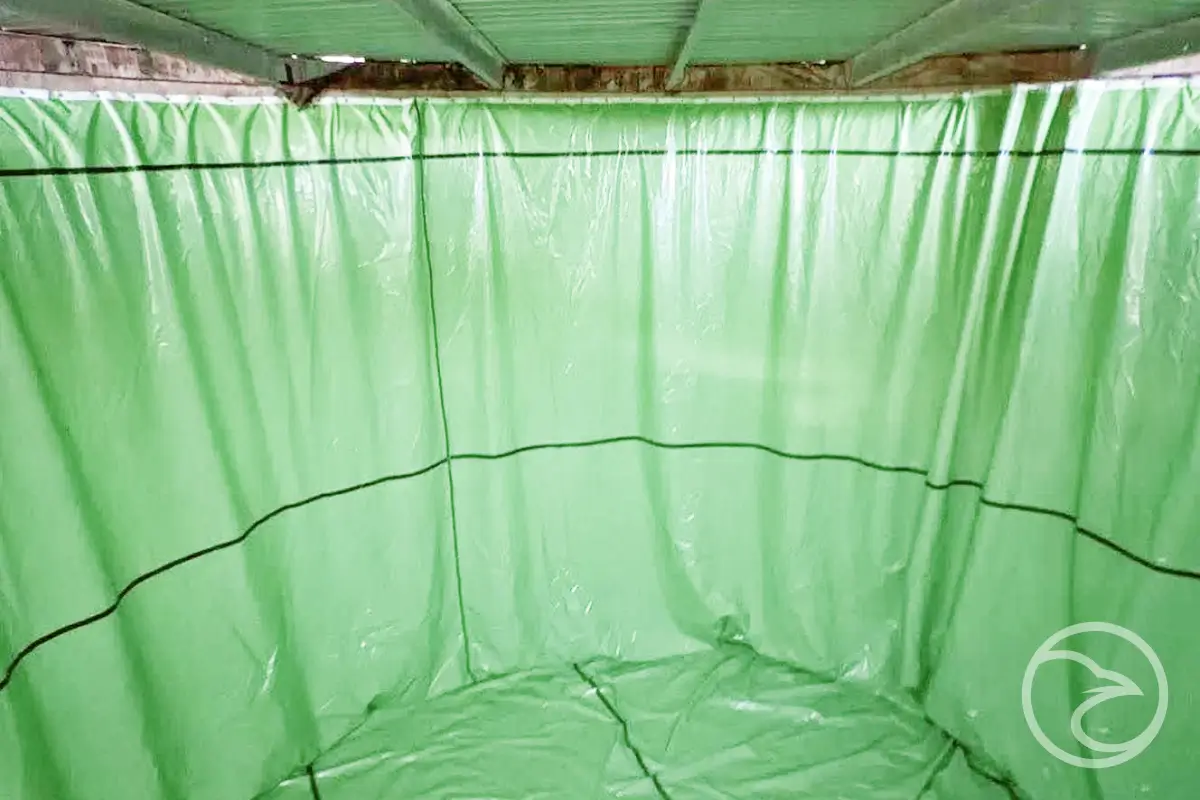
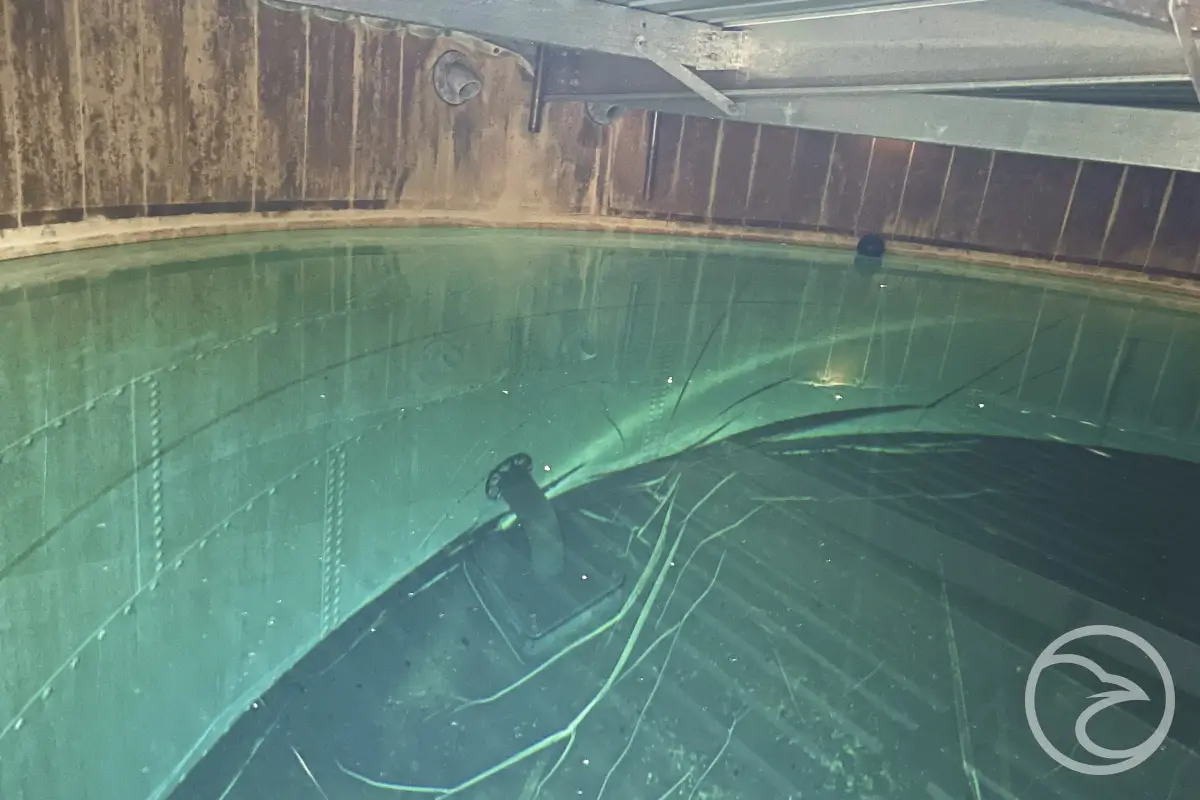
The underside of a water tank roof is a common location for condensation. Roof surfaces are exposed to external temperature changes while also contacting humid air inside the tank.
Moisture droplets may collect on roof panels, connections, and supporting components. Persistent condensation can contribute to deterioration where protective coatings are damaged or inadequate.
Internal Tank Walls
Condensation may form on tank walls when their surface temperature falls below the surrounding air’s dew point. This is particularly relevant where stored water cools the tank walls while the surrounding air remains warm and humid.
External condensation can also occur on the outside of tank walls. The location of moisture should be established before selecting a prevention strategy.
Roof Supports and Connections
Beams, brackets, bolts, and other metal components may experience condensation when their temperatures fall below the dew point. These areas can be vulnerable because moisture may remain around connections or difficult-to-access surfaces.
Repeated wetting can contribute to localised corrosion over time.
Access Hatches and Roof Penetrations
Access covers, hatch frames, and roof penetrations may experience temperature differences that encourage condensation. Moisture around these components should be assessed carefully.
Not every wet surface indicates condensation. Damaged seals or external water ingress may produce similar symptoms.
Can Water Tank Condensation Cause Corrosion?
Yes. Persistent condensation can contribute to corrosion on susceptible metal surfaces. Corrosion develops through electrochemical reactions involving metal, moisture, and other environmental factors.
Repeated condensation can keep exposed steel surfaces wet, particularly where protective coatings have deteriorated.
Potential consequences include:
-
Surface rust on exposed metal components.
-
Corrosion around bolts and structural connections.
-
Deterioration of protective coatings.
-
Localised corrosion in moisture-retaining areas.
-
Increased maintenance requirements.
-
Progressive deterioration if corrosion remains untreated.
However, condensation does not automatically cause significant structural damage. The severity of corrosion depends on material properties, coating condition, moisture exposure, and environmental factors.
Persistent moisture can accelerate deterioration around roof panels, fasteners, and structural connections. Our tank roof inspection guide explains common defects, corrosion warning signs, and when repairs or replacement may be necessary.
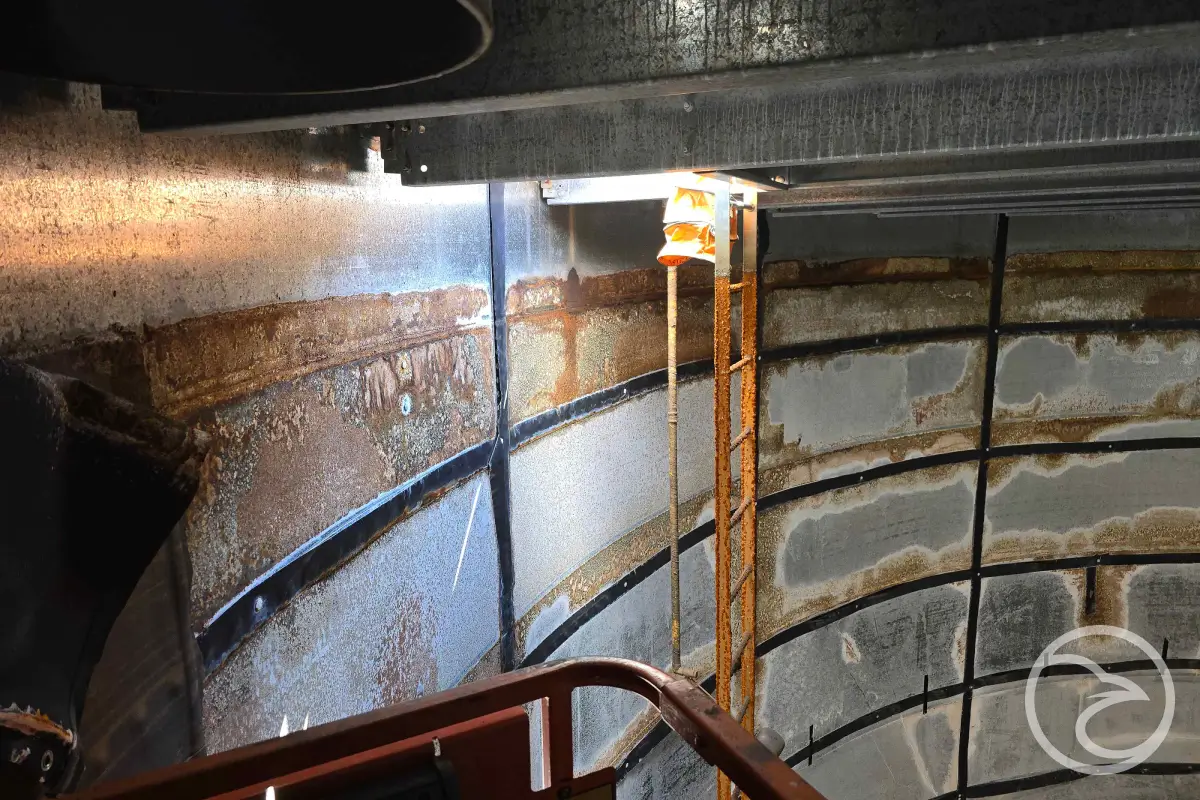
Condensation and Protective Coating Failure
Protective coatings help separate steel surfaces from moisture and other corrosive conditions. Where coatings crack, peel, or lose adhesion, condensation can reach exposed metal.
Repeated wetting may then contribute to corrosion beneath or around damaged coating areas. Coating repairs should address both the damaged surface and the conditions contributing to moisture exposure.
Can Condensation Affect Stored Water Quality?
Condensation can create potential water quality concerns, depending on the tank’s construction and condition. Droplets forming on internal roof surfaces may eventually fall back into the stored water.
If those surfaces contain corrosion products, accumulated debris, or other contaminants, dripping moisture may introduce them into the water. However, condensation itself does not necessarily mean the stored water is contaminated.
The actual risk depends on surface cleanliness, protective coatings, tank materials, and the intended use of the stored water. For potable water tanks, internal materials and maintenance practices should be appropriate for drinking water applications.
Any suspected contamination should be assessed through suitable water quality testing and professional investigation.
How to Prevent Condensation in Water Tanks
Reducing water tank condensation requires understanding why moisture is forming. Different tanks may require different solutions depending on their design, operating conditions, and surrounding environment.
1. Improve Temperature Management
Condensation occurs when surfaces become cooler than the surrounding air’s dew point. Reducing extreme temperature differences may help limit moisture formation.
Potential measures include suitable insulation, external shading, or design changes that reduce rapid surface cooling. However, the effectiveness of these measures depends on the tank’s operating conditions.
2. Consider Suitable Tank Insulation
Insulation can reduce heat transfer through tank walls and roofs. When correctly designed, it may help prevent exposed surfaces from reaching temperatures that encourage condensation.
For example, roof insulation may reduce temperature fluctuations on internal metal surfaces. However, unsuitable insulation can trap moisture or create hidden condensation problems.
Insulation systems should therefore be selected for the specific tank construction and environmental conditions.
3. Review Tank Ventilation
Ventilation can influence humidity and temperature conditions inside a water tank. Appropriate ventilation may help manage moisture under certain conditions.
However, uncontrolled ventilation can introduce additional humidity. For example, warm outdoor air entering a cooler tank may increase condensation on internal surfaces.
Ventilation design should also maintain appropriate protection against insects, debris, and other contaminants. This is particularly important for potable water storage.
4. Maintain Protective Coatings
Protective coatings cannot prevent condensation from forming, but they can reduce corrosion exposure on suitable metal surfaces. Damaged coatings should be assessed and repaired using appropriate preparation methods and materials.
For drinking water tanks, internal coating materials must be suitable for the intended water contact application. Regular coating maintenance can help limit deterioration associated with persistent moisture.
5. Manage Moisture Around Roof Components
Roof penetrations, access hatches, and supporting connections should remain in suitable condition. Damaged seals and poorly maintained openings may introduce additional moisture through water ingress.
Repairing these defects will not necessarily eliminate condensation, but it can prevent separate moisture problems.
6. Monitor Seasonal Conditions
Condensation may become more noticeable during periods of changing temperatures or elevated humidity. Facility managers should document when and where moisture appears.
Useful observations include:
-
Time of day when condensation occurs.
-
Recent weather and humidity conditions.
-
Water temperature, where available.
-
Locations of visible moisture.
-
Evidence of dripping or repeated wetting.
-
Changes in coating or metal surface condition.
These records can help identify patterns and distinguish condensation from other sources of moisture.
Does Tank Insulation Help Reduce Condensation?
Tank insulation can help reduce condensation under suitable conditions, but it is not a universal solution. Its effectiveness depends on insulation placement, thermal performance, installation quality, and the surrounding environment.
| Factor | How It Influences Condensation |
|---|---|
| Roof insulation | May reduce temperature fluctuations on internal roof surfaces. |
| Wall insulation | Can limit heat transfer between stored water and surrounding air. |
| Insulation continuity | Gaps may create localised cold surfaces where condensation develops. |
| Moisture protection | Poor installation may allow moisture to accumulate within insulation systems. |
| Ventilation conditions | Humid airflow may still cause condensation on exposed surfaces. |
| Tank operation | Water temperature and operating cycles influence condensation risks. |
Before installing insulation, facility managers should establish where condensation forms and what causes the surface temperature differences. A suitable solution should also consider maintenance access, fire safety requirements, and the tank’s intended application.
Condensation vs Water Tank Leakage: how to Tell the Difference
Moisture around a water tank does not always indicate condensation. Leaks, damaged seals, overflowing components, and external water ingress can create similar symptoms.
Identifying the actual moisture source is important before arranging repairs.
| Condensation | Water Tank Leakage |
|---|---|
| Often appears as droplets across cool surfaces. | May originate from a specific joint, crack, or connection. |
| Can vary with humidity and temperature. | May persist independently of weather conditions. |
| May develop on several exposed surfaces. | Often follows a particular flow path. |
| Can occur without a structural defect. | May indicate damaged components or failed seals. |
| Often changes during daily temperature cycles. | May change with water level or system pressure. |
These differences are general indicators rather than definitive diagnostic criteria. A tank may also experience condensation and leakage simultaneously.
If moisture appears repeatedly in the same location, further investigation may be necessary.
When Does Condensation Indicate a Bigger Problem?
Occasional condensation does not necessarily indicate that a water tank is defective. However, persistent moisture combined with visible deterioration may require professional assessment.
Warning signs include:
-
Increasing corrosion on roof panels or supports.
-
Repeated coating failure in moisture-prone areas.
-
Persistent water droplets around structural connections.
-
Rust staining or visible metal deterioration.
-
Unexplained moisture around access hatches.
-
Repeated dripping from internal roof components.
-
Moisture problems that remain unresolved after maintenance.
Persistent condensation may also expose existing weaknesses in protective coatings or structural components. Where moisture has contributed to corrosion or material deterioration, understanding when a storage tank needs repair can support appropriate maintenance decisions.
Conclusion
Water tank condensation develops when humid air contacts surfaces that are cooler than the surrounding air’s dew point.
Steel tank roofs, internal walls, supports, and connections may experience condensation as temperatures and humidity levels change. Although occasional condensation is not necessarily harmful, persistent moisture can contribute to corrosion, coating deterioration, and maintenance problems.
Prevention may involve insulation, ventilation management, protective coatings, and improved monitoring of operating conditions. For commercial and industrial water storage systems, understanding the cause of condensation is essential before selecting corrective measures.
Where persistent moisture is accompanied by corrosion or structural deterioration, professional assessment can help identify suitable maintenance or repair options.